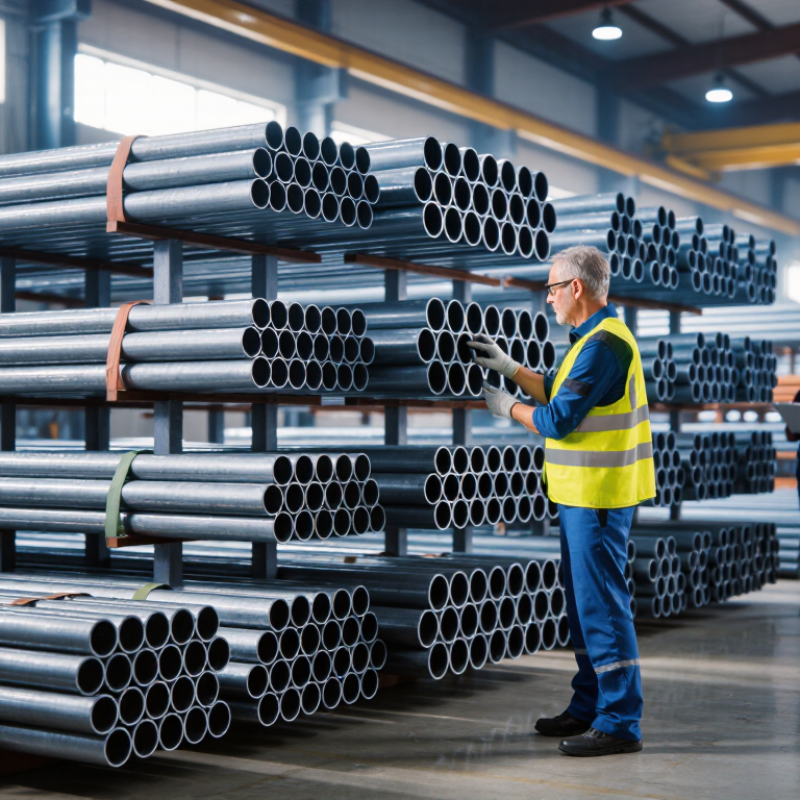
How to Find Reliable Carbon Steel Pipe Distributors?

Time:2026-10-12 Author:Liam
0%

Finding reliable Carbon Steel Pipe Distributors is not simply a matter of comparing prices. It requires careful checking, practical experience, and a willingness to question attractive claims. A distributor may show polished certificates, yet the real test begins with traceability, material consistency, and delivery discipline.

John S. Brinzo, a recognized steel industry executive, once stated, “Trust is earned through consistent performance, not through promises.” This principle applies directly to pipe sourcing. Reliable suppliers should identify the steel grade, manufacturing standard, heat number, wall thickness, and inspection records. They should also explain how products are stored and protected. Rust on pipe ends, unclear markings, or mixed bundles can reveal weak controls.

Look closely.

A dependable distributor answers technical questions without hesitation. They provide current mill certificates and accept reasonable third-party inspections. Their warehouse should be organized, dry, and clearly labeled. Delivery records should show fewer surprises, not repeated excuses. Customer references can also reveal how the company handles shortages, rejected materials, and urgent orders.

Still, no checklist is perfect. Even experienced buyers can overlook changing mill sources or incomplete documentation. That is why a trial order may be wiser than a large commitment. Compare the delivered pipe with the promised specification. Record what went wrong, too. This honest review may feel uncomfortable, but it improves future decisions. The best Carbon Steel Pipe Distributors are not merely sellers; they are accountable technical partners who make quality easier to verify.

How to Find Reliable Carbon Steel Pipe Distributors?

Define Your Carbon Steel Pipe Requirements

Before contacting carbon steel pipe distributors, define the service conditions clearly. State the pipe’s purpose, such as water transfer, structural support, or process use. Include outside diameter, wall thickness, length, and connection type. Small omissions can cause expensive substitutions.

Specify the required steel grade and applicable manufacturing standard. Mention whether you need seamless, welded, galvanized, or coated pipe. For outdoor projects, describe moisture, soil contact, temperature, and exposure to chemicals. This detail helps a distributor recommend suitable protection instead of guessing. It also makes quotations easier to compare.

Quantity matters beyond total weight. Provide the number of pieces, preferred packing method, delivery location, and required arrival date. Ask for dimensional tolerances, mill test certificates, inspection records, and traceable heat numbers. A reliable distributor should explain how these documents match each batch. Request sample documents before placing a large order.

Be precise.

In practical sourcing, I have seen buyers focus on price first and correct specifications later. That approach often creates delays, extra testing, or unusable stock. I would also review the requirement with an engineer when pressure, welding, or unusual temperatures are involved. My own checklist is not perfect; field conditions can reveal assumptions that paperwork misses. A clear technical brief gives distributors less room to misunderstand your needs and gives you stronger evidence when evaluating their reliability.

Verify Distributor Qualifications and Industry Experience

A reliable carbon steel pipe distributor should show more than a sales catalog. Ask for business registration, quality certificates, and the exact scope of certification. An ISO 9001 certificate matters only when it covers procurement, inspection, storage, and delivery. Check its validity directly with the issuing body. Small details matter.

The World Steel Association reported 1,892.1 million tonnes of crude steel production in 2023. Such scale creates complex supply chains and uneven quality control. A distributor with real experience should provide traceable mill test certificates, heat numbers, dimensional records, and inspection results. Compare these documents with the delivered pipe markings. Missing records are a warning sign. They may reflect poor administration, or something worse.

Industry experience also needs practical proof. Request references for similar grades, diameters, wall thicknesses, and project environments. Ask how the distributor handles corrosion protection, nonconforming goods, and urgent replacement orders. The OECD’s 2024 steel market analysis highlighted continuing capacity pressure and uncertain demand, making supplier stability worth checking carefully. Review warehouse photos, stock rotation, delivery performance, and technical staff credentials. I would not rely on years in business alone. Experience can become outdated when standards, testing methods, or customer requirements change. A useful audit includes one uncomfortable question: can the distributor explain a past failure and the corrective action taken?

How to Find Reliable Carbon Steel Pipe Distributors?

Verify distributor qualifications and industry experience by checking whether their technical teams understand the performance requirements of widely used carbon steel pipe grades.

The chart compares minimum specified yield strength values for common carbon steel pipe grades. A qualified distributor should be able to provide accurate material selection, traceable mill certificates, and documentation matching the required standard and grade.

Assess Product Quality, Standards, and Certification

How to Find Reliable Carbon Steel Pipe Distributors?

A reliable distributor should prove product quality with clear, traceable documents. Ask for the applicable standard, such as ASTM, ASME, EN, or API, based on your project requirements. Do not accept a standard name without checking its exact grade, dimensions, testing rules, and current edition. The certificate should match the pipe markings, heat number, size, wall thickness, and manufacturing route. During inspection, I compare these details directly with the packing list and mill certificate. Small mismatches deserve questions.

Certification also needs careful review. An ISO 9001 certificate can show a controlled quality system, but it does not prove every pipe meets your specification. Request material test certificates, dimensional inspection reports, hydrostatic test results, and, when necessary, independent laboratory reports. Check the certificate issuer, validity period, accreditation scope, and certificate number. A document may look professional. It can still be incomplete. Confirm the issuing body through its official records, not only through a scanned file from the distributor.

Tips: Visit the warehouse when possible. Inspect bundle labels, surface condition, pipe ends, and rust protection. Ask how rejected materials are separated and how heat-number traceability is maintained. Keep your questions written and compare answers from different distributors. I have found that fast replies are useful, but precise replies are more valuable. A distributor who admits a documentation gap and corrects it may be more dependable than one offering perfect paperwork immediately.

How to Find Reliable Carbon Steel Pipe Distributors? — Assess Product Quality, Standards, and Certification

Assessment Dimension What to Check Relevant Standards or References Acceptable Evidence from the Distributor Reliability Indicator
Product Specification Match Confirm that the pipe grade, outside diameter, wall thickness, length, end finish, and delivery condition match the purchase specification. ASTM A53/A53M ASTM A106/A106M API 5L EN 10255 Detailed quotation, product data sheet, dimensional tolerance information, and a line-by-line response to the technical inquiry. Specifications are stated precisely rather than described only as “standard pipe” or “high-quality pipe.”
Material Grade Verification Check the chemical composition and mechanical properties, including yield strength, tensile strength, elongation, and carbon equivalent where applicable. Requirements depend on the ordered grade and applicable product standard; values must be compared with the current edition of that standard. Heat number, chemical analysis, tensile test results, yield test results, and elongation data shown on a material test certificate. Every production lot or heat can be traced to test results and the applicable material grade.
Manufacturing Process Identify whether the pipe is seamless, electric-resistance-welded, submerged-arc-welded, or another specified type. Confirm that the process is suitable for the intended service. Product standards such as ASTM A53, ASTM A106, API 5L, and EN 10217 define requirements for particular pipe types and applications. Manufacturing route, process description, welding procedure information where relevant, and production inspection records. The distributor can explain process limitations and does not substitute a different pipe type without written approval.
Dimensional Accuracy Verify outside diameter, wall thickness, length, straightness, ovality, thread dimensions if applicable, and bevel geometry. Applicable dimensional tolerances are specified by the ordered product standard, such as ASTM A53/A53M, ASTM A106/A106M, or API 5L. Inspection report containing measured values, nominal dimensions, tolerance limits, inspection equipment, and inspection date. Inspection results show actual measurements, not only nominal dimensions.
Surface and Visual Condition Inspect for harmful cracks, laminations, deep pits, unacceptable dents, excessive rust, damaged threads, and coating defects. Acceptance criteria are defined by the relevant pipe standard, order specification, and any agreed coating or preservation specification. Time-stamped photographs, visual inspection records, packing photographs, and documented repair or rejection procedures. Surface condition is documented before dispatch and packaging protects the pipe from moisture and impact.
Non-Destructive Testing Determine whether ultrasonic, radiographic, electromagnetic, magnetic-particle, or other non-destructive testing is required for the pipe type and application. API 5L ISO 10893 series ASTM E213 ASTM E273 NDT procedure, inspection scope, equipment details, operator qualification, test results, and disposition of indications. Testing scope is clearly linked to the purchase order and is performed by qualified personnel or an appropriately competent laboratory.
Hydrostatic or Pressure Testing Confirm the required test pressure, holding time, test medium, leakage criteria, and whether the test applies to each pipe or a defined sample. Pressure-test requirements vary by product standard, grade, dimensions, and service conditions. Hydrostatic test report or certificate listing pipe identification, pressure, duration, result, and test date. Test records are traceable to heat numbers, pipe numbers, or batch identification.
Material Traceability Ensure that markings on the pipe correspond to the packing list, inspection report, and material certificate. Traceability requirements are commonly specified in the purchase order and product standard. Heat number, batch number, pipe number, permanent marking photographs, packing list, and certificate cross-reference. The distributor can trace the delivered pipe from shipment back to the manufacturing heat and inspection records.
Material Test Certificate Request a certificate that identifies the material, applicable standard, dimensions, test results, heat number, and certificate issuer. EN 10204 Type 3.1 EN 10204 Type 3.2 A signed and dated certificate issued by the manufacturer; a Type 3.2 certificate may include independent inspection involvement when contractually required. Certificate data is consistent with the order, markings, inspection reports, and actual delivered quantity.
Quality Management System Evaluate whether the organization operates documented controls for purchasing, inspection, nonconforming products, corrective action, and document retention. ISO 9001 Valid certificate showing the certified legal entity, scope, issuing certification body, certificate number, and expiry date. The certificate scope covers trading, distribution, inspection, or related activities relevant to the supplied pipe.
Laboratory Competence Check whether chemical, mechanical, dimensional, or NDT testing is performed by competent personnel using calibrated equipment. ISO/IEC 17025 Laboratory accreditation, test method, equipment calibration records, test report, and stated measurement uncertainty where applicable. Laboratory accreditation scope includes the actual test method and material or product type being tested.
Product Certification Confirm whether project documents require certification for a specific market, application, pressure service, or regulatory jurisdiction. Examples may include API product certification, pressure-equipment requirements, or local regulatory approvals; applicability depends on the project. Current certificate, certification scope, product designation, manufacturing location, and verification route through the issuing body. The distributor distinguishes between a management-system certificate and a product certificate instead of treating them as interchangeable.
Coating and Corrosion Protection For coated or preserved pipe, verify coating type, surface preparation, dry-film thickness, holiday testing, curing, and storage conditions. ISO 8501-1 ISO 12944 NACE/AMPP practices Coating specification, inspection report, thickness readings, surface-preparation records, and repair documentation. Protection requirements are defined according to the environment and transport conditions rather than applied generically.
Inspection Independence Decide whether pre-shipment inspection by the buyer, a third-party inspector, or an independent laboratory is necessary. Inspection arrangements should be stated in the purchase order, inspection and test plan, or contractual quality requirements. Approved inspection and test plan, inspection release note, nonconformance report, and signed final inspection record. The distributor accepts reasonable verification before shipment and provides access to relevant quality records.
Document Consistency Compare the quotation, purchase order, certificates, packing list, shipping documents, markings, and invoice for matching grades, quantities, and dimensions. Contract documents and the specified product standard govern the required information. Complete document package with consistent heat numbers, item descriptions, quantities, and revision numbers. No unexplained differences exist between commercial documents and technical quality records.
Nonconformance Management Review how damaged, incorrectly sized, off-grade, or undocumented material is isolated, reported, evaluated, and resolved. Quality procedures should define identification, segregation, disposition, corrective action, and customer notification. Sample nonconformance report, corrective-action record, replacement policy, and documented claim-handling process. The distributor reports problems transparently and does not relabel or mix questionable material with conforming stock.
Storage and Handling Assess protection against standing water, contamination, impact, thread damage, deformation, and incorrect mixing of grades or sizes. Storage controls should follow the product specification, coating requirements, and customer handling instructions. Warehouse photographs, storage procedure, rack arrangement, identification system, and stock inspection records. Material remains identifiable and protected throughout storage, handling, and loading.
Commercial and Technical Transparency Evaluate whether the distributor clearly states lead time, stock status, country of origin, minimum order quantity, tolerances, exclusions, and certification costs. Commercial terms should align with the technical specification and applicable import or project requirements. Written quotation, technical deviations list, realistic delivery schedule, and clearly defined warranty or replacement terms. The distributor identifies limitations before order placement instead of making unsupported compliance claims.
Note: The applicable standard, testing scope, certification level, and inspection requirements should always be confirmed against the project specification, service conditions, destination-country regulations, and the current edition of the referenced standard.

Compare Pricing, Inventory, Delivery, and Service

How to Find Reliable Carbon Steel Pipe Distributors?

Compare Pricing, Inventory, Delivery, and Service

A reliable carbon steel pipe distributor should make comparison easy, not merely offer the lowest quote. Request a line-item price covering pipe grade, outside diameter, wall thickness, length, coating, testing, packaging, and freight. A cheap figure can hide missing inspection documents or costly cutting charges. I have found that a written quotation reveals more than a polished sales promise. Ask how long the price remains valid, because steel costs can change quickly.

Inventory deserves a physical check. Request current stock quantities, heat numbers, manufacturing dates, and storage conditions. Pipes stored outdoors may develop surface rust, even when the material remains usable. Confirm whether sizes are available now or made after ordering. A dependable supplier should explain substitutions before shipment, never after arrival. Photos help, but they are not proof. Random certificates and traceable records provide stronger evidence.

Delivery performance affects schedules and cash flow. Ask for a realistic dispatch date, carrier details, packing method, and damage procedure. Service continues after payment. The distributor should answer technical questions, share mill certificates, and resolve shortages with documented steps. Test response speed before ordering: send a specific question and measure the reply. My own mistake was trusting fast replies alone; clear answers mattered more than quick ones. Check references from buyers with similar pipe requirements. A small trial order can expose weak packing, inaccurate counts, or slow claims handling.

Check References, Contracts, and Long-Term Reliability

How to Find Reliable Carbon Steel Pipe Distributors?

Reliable distribution begins with evidence, not attractive quotations. Ask for three recent customer references with similar pipe sizes and project schedules. Contact those customers directly. Ask whether deliveries arrived complete, certificates matched the goods, and problems received prompt attention. A warehouse visit can reveal practical details: labeled bundles, dry storage, clear stock records, and safe handling procedures. These details often matter more than polished sales language.

Tips: Check references carefully. Request mill test certificates, inspection reports, and traceability records before ordering. Compare contract terms for material grade, dimensions, tolerances, packaging, delivery dates, and inspection rights. Include a clear process for handling shortages or rejected pipes. Vague wording creates expensive arguments later. Keep every promise in writing.

Long-term reliability appears during difficult orders. Ask how the distributor handled a delayed shipment, a dimensional complaint, or a sudden quantity change. Their answer should include dates, responsible staff, and corrective actions. Review previous delivery records, not just current stock. A low price can hide weak documentation or unstable supply. I once treated fast replies as proof of reliability; that was a poor assumption. Response speed matters, but consistent performance matters more. Maintain a simple supplier review after each shipment, recording defects, delays, communication quality, and corrective results.

FAQS

What information should I prepare before contacting a carbon steel pipe distributor?

Describe the pipe’s purpose, outside diameter, wall thickness, length, and connection type. Mention the required steel grade and manufacturing standard. State whether you need seamless, welded, galvanized, or coated pipe. Be precise. Small gaps matter.

Which service conditions can affect pipe selection?

Explain moisture, soil contact, operating temperature, and chemical exposure. Outdoor pipes may need additional corrosion protection. Pressure, welding, and unusual temperatures require careful technical review. An engineer should check difficult applications. Paperwork can miss field conditions.

What quantity and delivery details should I provide?

Give the number of pieces, packing preference, delivery location, and required arrival date. Total weight alone is not enough. Include acceptable dimensional tolerances and replacement expectations. Clear quantities help distributors prepare comparable quotations.

How can I check a distributor’s qualifications?

Request business registration, quality certificates, and the exact certification scope. Check certificate validity through the issuing organization’s official records. A quality-system certificate does not prove every pipe meets your specification. Read the scope carefully. Small details matter.

Which documents should accompany carbon steel pipes?

Request material test certificates, dimensional inspection reports, and hydrostatic test results when required. Ask for inspection records and traceable heat numbers. The documents should match each pipe batch. Request sample documents before placing a large order.

How do I verify that the documents match the delivered pipes?

Compare pipe markings with the heat number, size, wall thickness, and manufacturing route. Check these details against the packing list and test certificate. Inspect bundle labels and pipe ends during receiving. Missing records need explanation. Do not assume.

How can I judge practical industry experience?

Ask for references involving similar grades, diameters, wall thicknesses, and project environments. Discuss corrosion protection, rejected goods, and urgent replacement procedures. Review warehouse conditions, stock rotation, and delivery performance. Years in business are not enough. Experience can become outdated.

What should I inspect during a warehouse visit?

Check bundle labels, surface condition, pipe ends, and visible rust protection. Ask how rejected materials are separated from approved stock. Confirm how heat-number traceability is maintained. Photographs help, but direct inspection is stronger. My checklist is imperfect.

Conclusion

Finding reliable Carbon Steel Pipe Distributors begins with clearly defining your project requirements, including pipe dimensions, grades, quantities, pressure ratings, applications, and delivery schedule. Once your needs are established, evaluate each distributor’s qualifications, technical knowledge, years of industry experience, and ability to support projects similar to yours. Product quality should be confirmed through applicable standards, material test reports, inspection procedures, and valid certifications.

A complete comparison should also consider pricing, available inventory, production or restocking lead times, shipping arrangements, customization options, and after-sales service. Before making a long-term commitment, request references, review customer feedback, and examine the distributor’s communication and problem-solving practices. Contracts should clearly state specifications, quality requirements, delivery terms, payment conditions, inspection responsibilities, and procedures for handling nonconforming products. A dependable distributor should offer consistent quality, transparent documentation, stable supply capabilities, and professional service throughout the entire business relationship.

Liam

Liam

Liam is a dedicated marketing professional with a profound expertise in the industry, where he excels at highlighting the unique advantages of our core products. With a keen understanding of market trends and consumer needs, Liam frequently updates our company’s professional blog, providing......