Top 10 Carbon Steel Pipe Grades for Global Buyers?

Time:2026-09-12 Author:Isabella
0%

Carbon Steel Pipe Grades remain central to global procurement because they balance strength, weldability, availability, and cost. A steel pipe may carry water, oil, gas, steam, or structural loads, yet its correct grade depends on pressure, temperature, corrosion exposure, and joining method. The World Steel Association reported global crude steel production of approximately 1.89 billion tonnes in 2023. That scale supports broad international supply, but it also creates variation in mills, certificates, and delivery quality.

This guide examines ten widely traded grades and specifications, including ASTM A53, ASTM A106, API 5L Grade B, and X-series line pipe grades. It also considers EN and JIS equivalents where buyers commonly compare international standards. The OECD Steel Market Developments reports continue to highlight changing demand, trade flows, and industrial overcapacity. These factors can affect lead times and pricing, even when the selected grade appears standard. Small details matter, such as seamless versus welded construction, normalized delivery, impact testing, and wall-thickness tolerance.

There is no universal top ten.

A grade that suits a refinery may fail a low-temperature pipeline requirement. For that reason, this ranking should support technical review, not replace it. Buyers should verify the latest ASTM, API, EN, or JIS edition, mill test certificates, heat numbers, and applicable project specifications. The International Energy Agency’s World Energy Outlook also shows continuing investment across natural gas, hydrogen, and infrastructure systems, although future demand remains uncertain. That uncertainty deserves attention. Practical experience suggests that the cheapest quotation is rarely the lowest total cost. Clear documentation, traceability, and correct grade selection usually matter more.
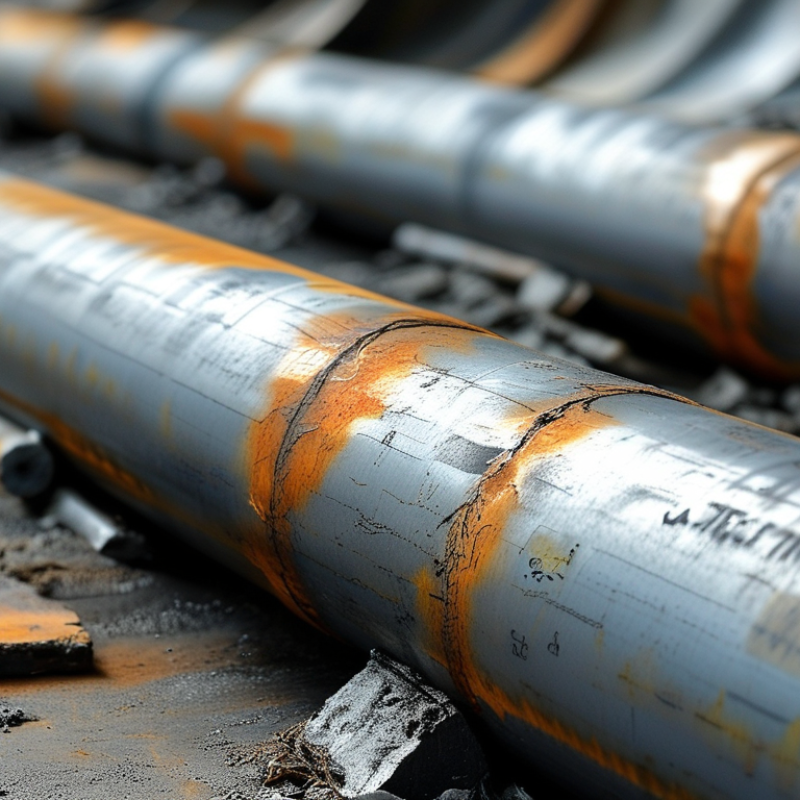
Top 10 Carbon Steel Pipe Grades for Global Buyers?

What Carbon Steel Pipe Grades Mean in Global Trade

Carbon steel pipe grades are trade language, not simple quality labels. Common choices include ASTM A53 Grade B, ASTM A106 Grade B, API 5L X42, X52, X60, X65, X70, ASTM A333 Grade 6, EN 10216 P265TR1, and JIS G3454 STPG410. Each grade reflects chemistry, strength, manufacturing route, temperature range, or service conditions.

The World Steel Association reported about 1,892 million tonnes of crude steel production in 2023. That scale supports broad supply, but it also creates specification confusion. A106 Grade B suits seamless, high-temperature service, while A53 Grade B often serves general mechanical and pressure applications. API 5L X grades describe line-pipe strength levels. X70 is not automatically better; project welding rules, fracture resistance, and operating pressure still matter.

Trade documents must connect the grade with the correct standard and edition. Buyers should verify pipe size, wall thickness, heat treatment, hydrostatic testing, impact requirements, and material traceability. An EN 10204 3.1 inspection certificate is commonly requested for industrial orders. Customs descriptions may not reveal these technical differences. That is a weakness in many purchasing comparisons. A grade name alone cannot confirm suitability. Sour service, offshore exposure, or low-temperature operation may require additional testing and stricter specifications. Small wording errors can change the acceptable product.

Top 10 Carbon Steel Pipe Grades for Global Buyers

What Carbon Steel Pipe Grades Mean in Global Trade

The chart compares commonly specified carbon steel pipe grades by minimum yield strength. ASTM, API and EN grades are selected according to widely used international specifications for pressure service, line pipe, low-temperature applications and high-temperature service. Actual requirements may also depend on chemical composition, wall thickness, impact testing, manufacturing process and project-specific standards.

How Carbon Steel Pipe Grades Are Classified and Compared

Top 10 Carbon Steel Pipe Grades for Global Buyers

Carbon steel pipe grades are compared through chemistry, strength, temperature performance, and manufacturing method. Common choices include A53, A106, A333, A500, A516, and pipeline grades such as X42, X52, X60, and X65. Each grade serves a different operating reality. A106 suits high-temperature service, while A333 addresses low-temperature impact requirements. A500 is often selected for structural tubing, not process piping.

The grade number alone is not enough. Buyers should check yield strength, tensile strength, wall thickness, impact testing, hydrostatic requirements, and delivery condition.

For example, X52 pipeline steel requires a minimum yield strength of 52 ksi, while X65 requires 65 ksi.

Higher strength may reduce wall thickness, but welding and fracture control become more demanding. The World Steel Association reported global crude steel production of about 1.89 billion tonnes in 2023. That scale supports broad supply, but it also creates uneven quality between mills and regions. A certificate can look complete and still deserve closer review.

Tips: Match the grade with pressure, temperature, fluid, and installation conditions. Request heat numbers, mill test certificates, and independent inspection when risk is high. Compare the specification edition, not only the grade label. Country-based naming can create confusion. Small wording differences matter.

Top 10 Carbon Steel Pipe Grades for International Buyers

For international buyers, grade selection should match temperature, pressure, welding method, and local certification. The World Steel Association reported about 1.89 billion tonnes of crude steel production in 2023. That scale supports broad availability, but it does not make every grade interchangeable. Common choices include ASTM A53 Grade B, A106 Grade B, and API 5L X42, X52, and X60. These grades serve water lines, structural piping, and oil and gas transmission.

For colder service, ASTM A333 Grade 6 remains widely specified because its impact testing suits low temperatures. European projects often use EN 10216-1 P235TR1, P265TR1, and EN 10217-1 P235TR1. Japanese specifications may select JIS G3454 STPG370. Ten grades, ten procurement conversations. The names look familiar, yet mill certificates can reveal important differences in chemistry, yield strength, and impact results.

The International Energy Agency’s World Energy Outlook 2024 continues to show strong infrastructure demand across emerging markets. Buyers should therefore check the full standard edition, not only the grade label. Wall thickness, outside diameter tolerance, hydrostatic testing, and NDT requirements can change the final cost. A practical weakness in many purchase orders is vague wording around “equivalent” material. It sounds efficient. It can create inspection disputes. Language, heat numbers, and traceability deserve equal attention. Temperature assumptions are often overlooked. That mistake is expensive.

How to Match Pipe Grades with Service Conditions

Top 10 Carbon Steel Pipe Grades for Global Buyers?

Choosing carbon steel pipe begins with service conditions, not price. In practical procurement reviews, buyers commonly compare ASTM A53, A106, API 5L grades B, X42, X52, X60, A333 Grade 6, A350 LF2, A671, and EN 10216-1 P235TR1. Each grade serves a different operating window. A53 suits general water, air, and low-pressure applications. A106 performs better in high-temperature process lines. API 5L grades support oil, gas, and long-distance pipelines.

Temperature changes the decision quickly. For outdoor lines in freezing regions, A333 Grade 6 offers reliable low-temperature toughness after impact testing. A350 LF2 is useful for forged components exposed to cold service. At elevated temperatures, confirm tensile strength, wall thickness, and allowable stress. A stronger grade is not automatically safer.

Think about the fluid, too. Wet gas, chlorides, and acidic environments can accelerate cracking and corrosion. Carbon steel may require corrosion allowance, internal coating, or a different material assessment. Sour service needs documented hardness control and suitable testing. Welding procedures matter as much as the pipe grade. Poor preheating can create problems even with certified material.

Check the details. Always verify the latest project specification, mill certificates, heat numbers, impact results, and nondestructive examination records. I have seen purchasing teams select by nominal grade alone. That approach looks efficient, but it can fail at the first cold start or pressure test. Grade selection should be reviewed against temperature, pressure, fluid chemistry, joining method, and inspection requirements.

Top 10 Carbon Steel Pipe Grades for Global Buyers? - How to Match Pipe Grades with Service Conditions
No. Pipe Grade Typical Governing Standard Product Form Minimum Yield Strength Minimum Tensile Strength Best-Matched Service Conditions Common Applications Key Buyer Checks
1 ASTM A106 Grade B ASTM A106/A106M Seamless pipe 240 MPa 415 MPa High-temperature pressure service
Suitable for elevated-temperature service when the design code, wall thickness and allowable stress are verified.
Steam, hydrocarbon processing, refinery piping, boiler and process lines. Confirm seamless production, heat-treatment condition, hydrostatic or nondestructive testing, dimensional tolerances and design-temperature allowance.
2 ASTM A53 Grade B ASTM A53/A53M Seamless or welded pipe 240 MPa 415 MPa General mechanical and utility service
Appropriate for moderate-pressure water, air, steam and structural applications.
Water lines, air lines, handrails, sleeves, fire-protection piping and general fabrication. Specify Type S, E or F; verify the intended pressure rating, welding requirements, schedule, coating and applicable end finish.
3 API 5L Grade B API Specification 5L Seamless or welded line pipe 245 MPa
PSL 1 minimum
415 MPa
PSL 1 minimum
Conventional pipeline service
Used for onshore gathering, transmission and utility pipelines at moderate strength levels.
Oil, gas, water and slurry pipeline systems. State PSL 1 or PSL 2, pipe manufacturing route, sour-service requirements, fracture-control needs, hydrotest and supplementary NDE.
4 API 5L X42 API Specification 5L Seamless or welded line pipe 290 MPa
PSL 1 minimum
415 MPa
PSL 1 minimum
Moderate-strength pipeline service
Useful where a higher yield level than Grade B is required without moving to a higher-strength line-pipe class.
Gathering lines, water transmission, low-to-moderate-pressure oil and gas pipelines. Check PSL, pipe diameter and wall thickness, weld seam requirements, Charpy testing, HIC/SSC resistance and field-welding procedure qualification.
5 API 5L X52 API Specification 5L Seamless or welded line pipe 360 MPa
PSL 1 minimum
460 MPa
PSL 1 minimum
Higher-pressure pipeline service
Balances strength, weldability and availability for many transmission-line designs.
Oil and gas transmission, water pipelines, process feed lines and long-distance pipelines. Verify actual design pressure, toughness temperature, sour-service testing, chemical limits, weldability and girth-weld qualification.
6 API 5L X60 API Specification 5L Seamless or welded line pipe 415 MPa
PSL 1 minimum
520 MPa
PSL 1 minimum
High-strength transmission service
Selected when strength and pressure capacity are important, subject to project-specific fracture and welding controls.
Large-diameter oil and gas transmission lines, high-pressure water and cross-country pipelines. Pay particular attention to toughness, weldability, strain-based design, sour service, hardness control, DNV or project requirements and mill-test documentation.
7 ASTM A333 Grade 6 ASTM A333/A333M Seamless or welded pipe 240 MPa 415 MPa Low-temperature service
Designed for pipe applications requiring impact toughness at low temperatures; Grade 6 is commonly associated with impact testing at −45°C.
Cold-service piping, refrigerated systems, cryogenic-area utility lines and low-temperature process piping. Confirm the required impact-test temperature, specimen orientation, heat treatment, weld procedure, minimum design temperature and supplementary NDE.
8 ASTM A252 Grade 3 ASTM A252/A252M Welded or seamless piling pipe 310 MPa 455 MPa Structural and foundation service
Best suited to load-bearing piles rather than pressure containment.
Marine piles, bridge foundations, building foundations, dolphins and offshore structural supports. Confirm pile design loads, wall thickness, straightness, end preparation, weld quality, length tolerance, impact or fatigue requirements and driving conditions.
9 EN 10216-2 P265GH EN 10216-2 Seamless pressure-purpose pipe 265 MPa
up to 16 mm at room temperature
410–530 MPa Pressure equipment and elevated temperature
Non-alloy pressure steel for European-design pressure systems within the applicable temperature and thickness limits.
Boiler components, heat exchangers, pressure vessels and industrial process piping. Verify product standard edition, wall-thickness class, delivery condition, allowable stress, impact requirements, EN 10204 certificate and PED/project compliance.
10 JIS G3454 STPG 370 JIS G3454 Carbon steel pipe for pressure service 215 MPa 370 MPa Moderate-pressure service
Suitable for commonly used pressure piping where the applicable Japanese specification and design code are accepted.
Steam, water, gas and general industrial pressure piping. Confirm acceptance of JIS material in the destination country, manufacturing method, heat treatment, hydrostatic test pressure, dimensions and equivalent design code.
Important: Mechanical-property values are minimum or specified ranges from the referenced standards and can vary with product form, wall thickness, delivery condition, PSL and standard edition. Final grade selection must be checked against design pressure, temperature, corrosion, fluid composition, fracture toughness, welding requirements and the governing construction code.

How Buyers Verify Standards, Documents, and Supply Quality

Global buyers often compare ten common carbon steel pipe grades: ASTM A53 Grade B, ASTM A106 Grade B, ASTM A333 Grade 6, API 5L Grade B, X42, X52, EN 10216-1 P235TR1, P265TR1, JIS G3454 STPG370, and JIS G3455 STS370. However, the grade name alone cannot confirm supply quality. Buyers should match the purchase order with the applicable standard, dimensions, manufacturing method, heat treatment, and service temperature. A small mismatch can affect welding, pressure performance, or inspection approval.

Tips: Request the original mill test certificate, not only a scanned summary. Check heat numbers against pipe markings, packing lists, and inspection records. Verify chemical results, tensile strength, yield strength, elongation, hydrostatic testing, and impact testing where required. Certificates should show the standard edition and authorized approval. Third-party inspection can confirm quantity, wall thickness, surface condition, and marking accuracy.

Document review needs practical attention. A certificate may look complete but still use an outdated standard revision. Ask for traceability from billet or heat to finished pipe. Review non-destructive testing records when specified. Independent laboratories can retest selected samples, especially for critical service. No checklist is perfect. Buyers should record exceptions instead of quietly accepting them. Even a clean shipment can contain mixed bundles, unclear markings, or incomplete test pages. Good procurement leaves evidence that another engineer can understand.

FAQS

How should buyers choose a carbon steel pipe grade?

Start with pressure, temperature, fluid chemistry, and installation conditions. Price comes later. A general-purpose grade may suit water or air lines. Higher-temperature service needs stronger temperature performance. The grade label alone is insufficient.

Why is yield strength important?

Yield strength shows when permanent deformation may begin. Higher strength can allow thinner walls, but welding and fracture control become harder. A thinner pipe is not automatically safer.

Which pipe characteristics matter in cold environments?

Low-temperature toughness and impact testing are critical. Pipes exposed to freezing weather may crack during startup or pressure changes. Confirm impact results, wall thickness, and delivery condition. Cold service is unforgiving.

How does fluid chemistry affect material selection?

Wet gas, chlorides, and acidic fluids can accelerate corrosion and cracking. Buyers may need corrosion allowance, internal protection, or another material assessment. Sour service also requires hardness control and suitable testing.

What documents should buyers request?

Request original mill certificates, heat numbers, inspection records, and the applicable standard edition. Verify chemistry, yield strength, tensile strength, elongation, and hydrostatic testing. Scanned summaries may omit uncomfortable details.

How can buyers confirm pipe traceability?

Match heat numbers across pipe markings, certificates, packing lists, and inspection records. Traceability should connect the original heat to the finished pipe. Mixed bundles deserve immediate review.

Why are welding procedures important?

Welding quality can determine performance as much as the pipe grade. Confirm procedure qualification, preheating, consumables, and heat control. Certified material can still fail after poor welding.

When is independent inspection useful?

Independent inspection helps confirm quantity, wall thickness, surface condition, markings, and testing. It is especially useful for critical service or unfamiliar suppliers. No checklist is perfect.

What common procurement mistake should buyers avoid?

Selecting by nominal grade alone is a common mistake. Small wording differences can change testing, manufacturing, or temperature requirements. Review exceptions openly. A clean-looking shipment may still contain incomplete pages.

Conclusion

Carbon Steel Pipe Grades are essential reference points for international buyers because they define a pipe’s chemical composition, mechanical performance, dimensions, and intended service conditions. In global trade, grades are commonly classified and compared through standards, manufacturing methods, pressure ratings, temperature limits, and application requirements. A practical review of the top ten commonly specified grades can help buyers understand differences in strength, weldability, corrosion resistance, toughness, and suitability for water, construction, energy, process, and industrial piping systems.

Selecting the right grade requires matching material performance with operating pressure, temperature, fluid characteristics, installation environment, and expected service life. Buyers should also verify the applicable standard, heat treatment requirements, inspection procedures, test results, traceability records, and material certificates before shipment. Clear specifications and consistent documentation reduce misunderstandings between suppliers and purchasers, support reliable quality control, and help ensure that the selected carbon steel pipe performs safely and efficiently in its intended application.


Isabella

Isabella

Isabella is a dedicated marketing professional with a sharp focus on driving brand growth and engagement through strategic content creation. With an extensive background in digital marketing, she combines her passion for storytelling with her keen understanding of industry trends to deliver......